Marine environments place heavy demands on electrical systems. Saltwater, humidity, UV exposure and constant vibration can shorten the lifespan of standard fixtures. This is why marine-grade LED lighting has become the preferred choice for boaters, dock owners and waterfront property managers. Marine Lighting Palm Beach specializes in lighting solutions designed to endure these challenges while offering consistent illumination, efficiency and safety.
LED lights provide long service life, low energy consumption and minimal heat output. These qualities make them suitable for everything from navigation systems to underwater installations. When lighting is built specifically for marine use, components are sealed, corrosion-resistant and protected against moisture intrusion. This ensures reliability whether the lighting is used offshore, in an engine room or on a residential dock.
Core Marine Lighting Categories at Marine Lighting Palm Beach Navigation and Safety Lighting
Navigation lights serve an essential safety function on every vessel. Marine Lighting Palm Beach provides a full range of navigation lighting that meets required visibility and placement guidelines. These include bow lights, stern lights, anchor lights and all-round white lights. Reliable navigation lighting ensures other vessels can clearly identify your position and course, which is particularly important during night travel or low-visibility conditions.
Underwater Boat and Dock Lighting
Underwater LED lighting is one of the most recognized specialties within Marine Lighting Palm Beach’s offerings. These lights are engineered for continuous submersion and intense exposure to saltwater. Underwater lights enhance visibility around a vessel or dock, support safer boarding and create a distinctive glow beneath the waterline.
Many underwater fixtures are available in single-color white, blue or green, as well as color-changing RGBW. They can be mounted on the boat’s transom or hull, or installed below dock structures. Aside from visual appeal, underwater lighting can attract marine life, which is an advantage for boaters who enjoy night fishing.
Dock, Deck and Walkway Lighting
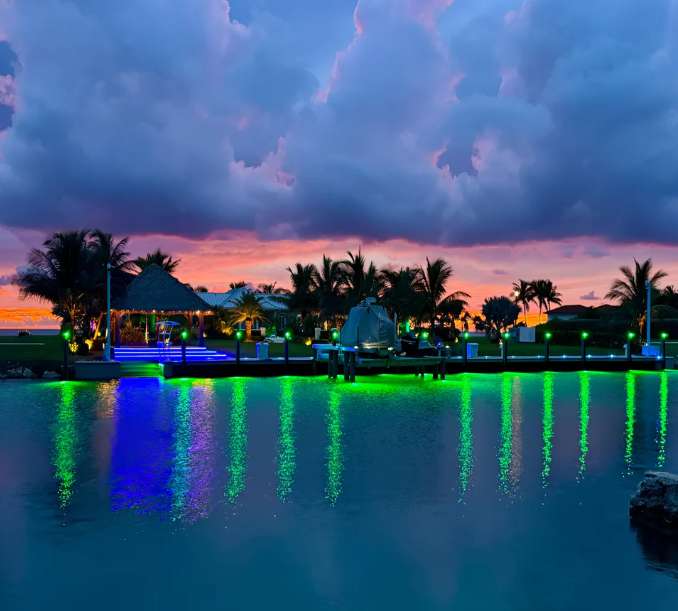
Dock and deck lighting plays an important role in waterfront safety. Marine Lighting Palm Beach offers corrosion-resistant fixtures suited for pilings, walkways, stairs and platforms. These lights help guide foot traffic after sunset and create a well-defined docking area. Options include recessed step lights, low-voltage pathway lights, piling cap lights and rail lighting. Each is built to withstand daily exposure to moisture and sun.
Engine Room and Interior Lighting
Engine room lighting must be sturdy, vibration-tolerant and safe to operate in confined spaces. The LED engine room lights available through Marine Lighting Palm Beach offer consistent illumination without generating excessive heat. Interior lighting includes courtesy lights, cabin downlights and reading lights. These fixtures are created for comfort and energy efficiency, allowing long periods of use without draining power reserves.
Technical Factors That Influence Marine Lighting Selection Determining Lighting Zones
Different areas of a vessel or dock require specific lighting types. Proper classification ensures the right balance of brightness, beam angle and durability. Typical lighting zones include:
Deck and cockpit areas that benefit from floodlights or wide-beam LEDs.
Cabins and enclosed spaces where warm LED light is preferred.
Underwater surfaces that require sealed, submersible fixtures.
Navigation points that demand compliant light placement and color.
Planning a lighting layout around these zones helps achieve both safety and aesthetic goals.
Waterproof Ratings and Sealed Construction
A key factor in selecting marine lights is the ingress protection rating. Lights used on boats and docks often require IP67 or IP68 protection. These ratings indicate resistance to dust and the ability to withstand exposure to water. Underwater lights need higher standards to allow submersion without failure. Quality marine fixtures use sealed housings, marine-grade cable glands and protective finishes to prevent corrosion.
Materials and Corrosion Resistance
Marine Lighting Palm Beach focuses on providing lights made from materials such as 316 stainless steel, bronze and UV-stable composites. These materials resist corrosion, discoloration and structural wear caused by saltwater. Choosing fixtures constructed from marine-grade components greatly extends the lifespan of the lighting system.
Power Requirements and Control Features
LED systems vary in their electrical needs. Some require drivers or controllers, especially color-changing RGBW systems. Control options range from simple switches to advanced remote systems and smartphone applications. For boats, understanding power load, battery capacity and wiring routes is essential. For docks, transformer placement and low-voltage distribution must be properly planned.
Benefits of Working with Marine Lighting Specialists Knowledge of Local Marine Conditions
The Palm Beach coastal environment presents challenges such as high salinity, intense UV exposure and year-round humidity. Marine Lighting Palm Beach understands these conditions and guides customers toward fixtures that withstand long-term outdoor use. Local knowledge ensures that lighting systems remain functional and safe despite constant environmental stress.
Professional Installation Services
While some lighting upgrades are simple, installations such as through-hull underwater lighting or complete dock systems often require professional handling. Proper sealing, wiring and mounting are essential to prevent water intrusion and equipment failure. Professional installation also supports compliance with electrical and marine lighting standards.
Ongoing Support and Maintenance
Even durable lighting systems benefit from routine maintenance. Marine Lighting Palm Beach provides support for diagnosing performance issues, inspecting seals, replacing fixtures and upgrading older systems to LEDs. Their expertise ensures that lighting installations remain reliable and safe over time.
Energy Efficiency and Environmental Impact
LED technology supports energy efficiency by drawing minimal power and producing low heat. For boats, this means reduced battery consumption and longer operating times. For docks, low-voltage LED systems allow continuous operation with minimal energy use. Durable LEDs also reduce waste by minimizing replacements and fixture disposal.
Some underwater lights offer color options that minimize unnecessary light spread while still attracting marine activity. By choosing appropriate settings, waterfront property owners can reduce light pollution without sacrificing functionality.